
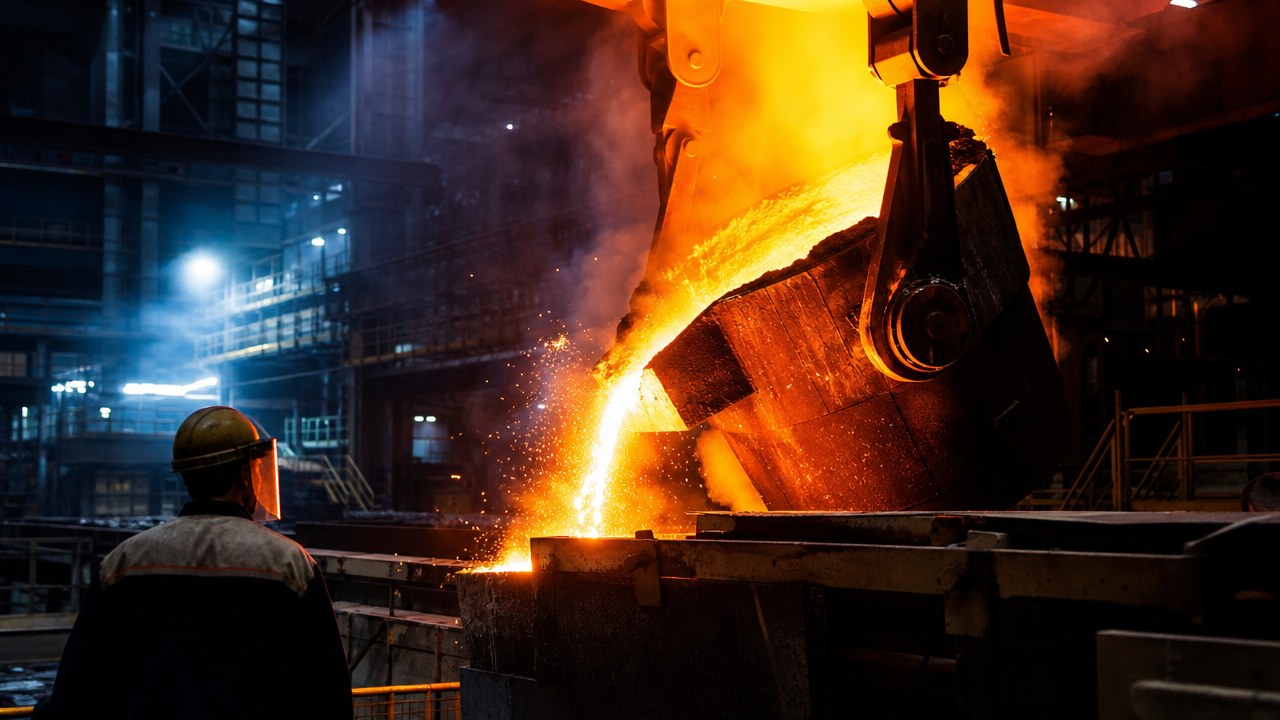
FROM ONE OUNCE TO 30,000 POUNDS
A single foundry quotes what its equipment can make. GW starts from your print.
Because we place work across a qualified network of domestic and international foundries, every major casting process is on the table — and the recommendation you get is driven by what the part needs: geometry, material, tolerance, volume, and cost.
Green sand, no-bake, and shell molding across the network, from ounces to multi-ton castings. Competitive tooling costs make sand casting the practical choice for prototypes and short runs; process control keeps it dependable at production volume.
Iron is where GW started in 1932, and it’s still most of what we ship. Grey iron (Class 30, 40, 60) for vibration damping, thermal stability, and easy machining. Ductile iron (65-45-12 and related grades) for tensile strength and impact resistance — often a direct, lower-cost replacement for steel or weldments.
For smaller, complex, higher-volume parts, investment casting delivers near-net shape and cuts downstream cost. If your part is a fit, we’ll place it with the right specialty foundry — you don’t have to go find one.
When casting and machining are quoted separately, every defect becomes a debate between two vendors. At GW, both are managed by one team, so it’s simply our problem to fix. Pilot runs validate every setup; CMM inspection verifies critical dimensions — bores, flatness, alignment — before parts ship. What arrives is ready for your line.
Grey iron, ductile iron, steel, stainless, aluminum, bronze, and custom alloys formulated to your requirement.
If you have a material spec, we’ll meet it.
Specs & Tolerances.
Every part is produced to your drawing and your acceptance criteria. If you’re not sure what tolerance a process can hold, ask — you’ll get an honest answer before you commit, not an excuse after.

What to Send With Your RFQ.
The faster we understand the part, the faster you get a real number. Helpful to include: