
ORDERING A CASTING IS A FOUR-MONTH DECISION.
USING ONE ISN’T.
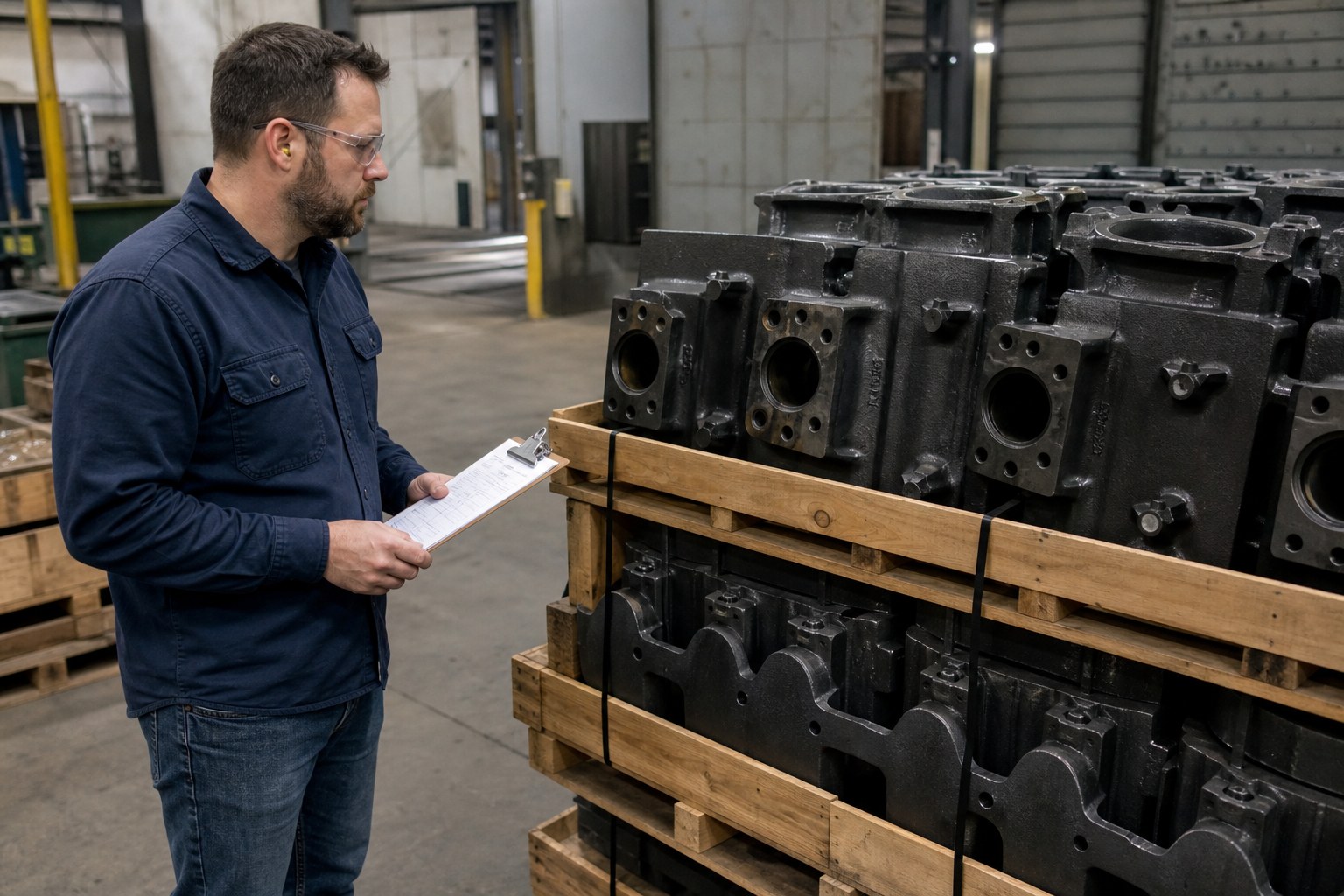
Most castings arrive at the end of a four-month chain — pour, machine, paint, ship, clear customs. GW’s Inventory Management System takes that chain off your calendar. We produce ahead of your demand, hold the parts in Massachusetts, and release them the way you actually consume them.
A casting ordered direct from a foundry is quoted in months. Production, then finishing, then a vessel, then a port, then a truck. Nothing about that timeline matches how your line actually consumes parts — so you either carry the inventory yourself, or you wait.
The customers on GW’s Inventory Management System do neither. Their parts are produced against a forecast, finished, and sitting on a shelf in Millbury before they’re ordered. When a release comes in, it ships — in days, not months.
WE WATCH THE SHORTAGE FORM.

The system starts with your demand, not our stock. Customers on the program send GW a rolling sixteen-week forecast. We hold that against what’s on our floor, what’s already on the water, and what’s still in production — and we measure every part the same way: how many months of cover is left.
That single number is what turns a spreadsheet into a warning. A part with four months of cover is fine. The same part with six weeks of cover and a ninety-day production window is a shortage that has already happened — it just hasn’t reached your line yet. The system surfaces it while there’s still time to do something: move the order up, split the shipment, fly a partial, or shift the work to another source.
Nothing about that is automatic on your end. You get a phone call from a GW team member before you get a problem.

THE MANAGED STOCK REPORT.
Every week, customers on the program get their own report. Not a portal login and not a raw data dump — a document that says what arrived, what’s coming, what’s late, and what needs a decision.
Most of our customers open it before they open their own system, because it holds something theirs doesn’t: what’s happening upstream. A vessel delay in Ningbo, a foundry that stretched its production window from sixty days to ninety, a currency move that changes what the next release should be — those land in your report the week we learn about them, not the month you feel them.

THE FLEXIBILITY IS THE POINT.
While the parts sit in Millbury, they’re GW’s. Our cash, our shelf, our risk. You order what you need, when you need it.
What that buys you isn’t a line on a balance sheet — it’s room to move. A customer takes an order they couldn’t otherwise quote, because six months of a part is already sitting on our floor and they can have all of it. A spike lands, and it gets covered. A new program starts before the tooling would normally allow.
We’ve watched customers win business on that alone. It’s the difference between telling your customer “twelve weeks” and telling them “Thursday.”

IT STARTS WITH ONE PART NUMBER.
Nobody moves their whole book onto a stocking program on day one. It starts with the parts that hurt — the long-lead item, the one that stops the line, the one you’ve been carrying six months of because the lead time gave you no choice.
We build the forecast around those, prove the coverage, and grow the program from there. Some of our longest-running customers started with a single part number and a bad quarter.